
Quick Answer
Surgical dental implant placement is usually not painful during the procedure itself, because local anesthesia numbs the area. Most patients report pressure, vibration, and movement rather than sharp pain. Discomfort is more commonly noticed afterward, once the anesthesia wears off, as soreness, tenderness, or swelling. How much you feel depends on the number of implants, the complexity of treatment, any additional procedures, and your own healing response.
Is Surgical Dental Implant Placement Painful?
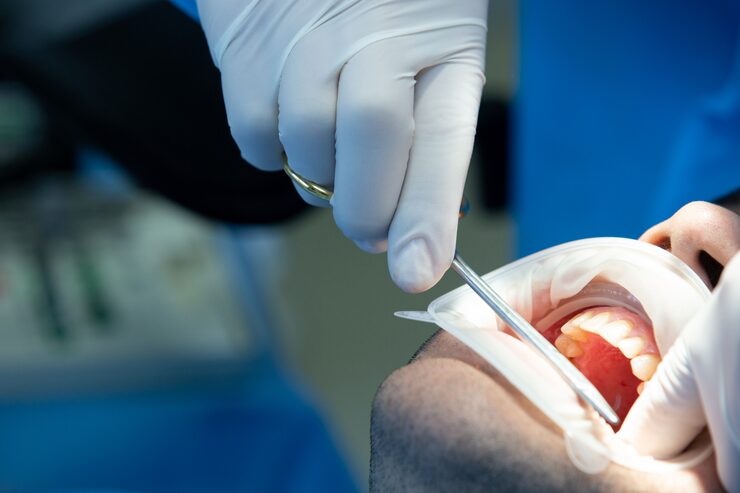
For most patients, the surgery itself is not the painful part. A surgical dental implant is placed under local anesthesia, which numbs the gum and bone at the treatment site, so the sensations people describe during placement are pressure and movement rather than sharp pain.
That said, this is surgery, and calling it painless would be wrong. An implant is placed into the jawbone, and the body responds the way it does to any surgical site. Once the anesthesia wears off, you may notice soreness, tenderness when you touch the area, and some swelling over the following days.
What varies is how much. Some patients take nothing stronger than an over-the-counter pain reliever and go back to work the next day. Others find the first two or three days quite uncomfortable. Both are normal. Your experience depends on how many implants were placed, where they sit, whether other procedures were done at the same time, and how your body heals. If you are weighing dental implants Fairhaven patients ask about, that honest range is the right expectation to start from.
What Does Dental Implant Surgery Feel Like?
Before treatment
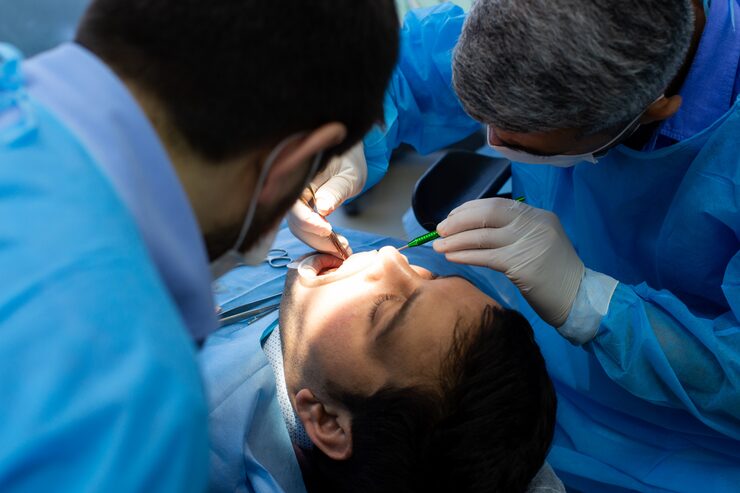
Your dentist examines the site, reviews your imaging, and explains the plan. Local anesthetic is given, and you wait a few minutes for the area to go fully numb. Most people find this part no different from having a filling done.
During treatment
With the area numb, the sensations patients most often report are:
- Pressure, sometimes firm, as the implant site is prepared
- Vibration from the dental handpiece
- Movement or pushing against the jaw
- Sounds from the instruments, which some people find more unsettling than the sensation itself
Pressure is not the same thing as pain. You can feel that something is happening without it hurting. If you do feel anything sharp, tell your dentist, because more anesthetic can be given.
After treatment
As the numbness fades you may notice soreness, tenderness around the gum, swelling, and mild discomfort at the site. This is the phase most patients are really asking about when they ask whether implants hurt.
How Painful Is Dental Implant Surgery?
There is no single answer, because pain perception differs from one person to the next. Two patients can have the same procedure and describe it very differently, and neither is wrong.
Factors that tend to influence how much discomfort a patient notices include:
- The number of implants placed in one appointment
- Where in the mouth the implant sits
- The complexity of the surgical procedure
- Whether additional procedures were done at the same time
- Individual pain sensitivity
- How quickly and how smoothly you heal
The distinction worth holding onto: placement is done under anesthesia, so that part is managed. Discomfort is far more likely during recovery. When patients say implant treatment hurt, they are usually describing days two and three, not the appointment.
What Happens During Surgical Dental Implant Placement?
Knowing the sequence makes the appointment easier, because very little of it is a surprise. A typical dental implant procedure may involve:
- A dental examination and treatment planning appointment, usually including imaging
- Evaluation of the tooth, gums, jawbone, and your overall oral health
- Local anesthesia to numb the treatment area
- Preparation of the implant site in the jawbone
- Placement of the implant into the prepared site
- Closing or protecting the area as appropriate for your case
- Written and spoken instructions for the recovery period
The exact steps differ depending on your condition and treatment plan. Some patients need a preparatory procedure first, such as an extraction or bone grafting, and when that is the case the overall timeline and recovery look different. Not every patient needs bone grafting, so do not assume it applies to you until your dentist has evaluated your jaw.
What Can You Expect After Dental Implant Surgery?
In the first days after surgery, patients commonly experience mild to moderate soreness, tenderness around the site, swelling, minor bleeding or oozing, and sensitivity in the area. None of that is unusual, and most of it eases as healing progresses.
Following your postoperative instructions matters more than most patients expect, because they keep the site clean and undisturbed while the implant begins to integrate with the bone. General recovery considerations include:
- Taking pain-control medication exactly as your dentist directs
- Keeping the surgical area clean in the specific way you were shown
- Eating soft, appropriate foods during early recovery
- Avoiding activities your dentist told you to avoid, which often includes smoking and strenuous exercise
- Attending the follow-up visits that were scheduled for you
Your dentist will give you dosing guidance specific to you and your medical history. Do not take dosing advice from an article, including this one.
How Long Does Dental Implant Pain Last?
Discomfort generally follows a pattern, even though the timeline differs between patients. Soreness typically begins once the anesthesia wears off. Swelling often builds over the first day or two before it starts to settle. From there, most patients notice steady improvement rather than a sudden stop.
We are not giving a fixed recovery timeline here, because your dentist can give you a realistic one for your case and an article cannot. What matters more than the calendar is the direction of travel, and discomfort that is slowly improving is usually healing behaving normally.
Discomfort that is severe, getting worse rather than better, or appearing after you had already started to feel fine is different. That should be discussed with your treating dentist, because it may need evaluation.
What Can Make Dental Implant Surgery More Uncomfortable?
Some situations tend to involve a more involved recovery than a single straightforward implant. These include:
- More extensive surgical treatment
- Multiple implants placed in one visit
- Bone grafting or other additional procedures
- Existing oral health issues, such as active gum disease, that need addressing
- Individual sensitivity
- Differences in how quickly a person heals
None of these means a procedure is always more painful. A patient having three implants may have an easier week than a patient having one. Complexity is worth discussing at your consultation, so what you plan for matches what you are actually having done.
How Can You Make Dental Implant Recovery More Comfortable?
Most of what helps is unglamorous and effective:
✓ Follow your postoperative instructions as written, not from memory
✓ Take medication only as directed by your dentist
✓ Protect the surgical area and avoid poking or probing it
✓ Follow the dietary instructions you were given during early healing
✓ Maintain oral hygiene the way your dentist recommended for the site
✓ Avoid the specific activities your dental provider restricted
✓ Call the office if symptoms start to concern you
Home remedies are not a substitute for professional dental care. If something feels wrong, the right move is a phone call, not a search for a home fix.
When Should You Contact a Dentist After Implant Surgery?
Contact your dental office if you experience symptoms that are severe, worsening, unexpected, or simply concerning to you. You do not need to be certain something is wrong before you call. Examples include:
- Severe pain, or pain that is increasing instead of easing
- Significant or spreading swelling
- Bleeding that persists rather than settling
- Signs of infection around the surgical site
- Fever or other symptoms that feel systemic
- Any problem involving the implant itself or the surgical area
An article cannot tell you what is causing a symptom, and we are not going to try. If something is happening outside office hours and it cannot wait, emergency dental care is the right route.
Are Dental Implants Worth It Despite the Surgery?
For many patients, yes. An implant replaces a missing tooth root rather than resting on the gums or relying on neighboring teeth, and patients often report it functions much like a natural tooth.
Whether implants are appropriate for you is a separate question. It depends on your oral health, gum health, jawbone condition, general health, treatment goals, and individual circumstances. Implants are not the right answer for everyone, and a responsible dentist will tell you when they are not.
Other tooth-replacement options exist and are sometimes the better fit. Depending on your situation, crowns and bridges or dentures may be worth discussing alongside implants. All of these fall under restorative dentistry, and the comparison is best made after an examination rather than before one.
I Am Looking for a Dentist in Fairhaven
I am looking for a dentist in Fairhaven is a common way people start, and it usually means something specific has gone wrong: a tooth is missing, damaged, or hurting. In that situation an evaluation comes before a treatment decision.
If dental implants are on your mind, look for a dental office that will:
- Evaluate the condition of the tooth and the surrounding gum and bone
- Discuss the realistic tooth-replacement options for your case
- Explain the implant procedure in plain language
- Describe what recovery is likely to involve
- Raise alternatives when an implant is not the best fit
- Answer questions about treatment planning and cost before you commit
Smiley Dental Fairhaven serves patients in Fairhaven, New Bedford, and the surrounding South Coast area, and we are accepting new patients. You can also review our full range of dental services before booking.
I Have a Tooth Problem. Please Recommend Me a Dentist in Fairhaven.
I have a tooth problem, please recommend me a dentist in Fairhaven is a reasonable request, but the honest first step is a diagnosis rather than a referral to a procedure. Tooth problems have very different causes, and the right treatment depends on which one you have.
If a tooth is missing or cannot be saved, a surgical dental implant may be one option worth discussing. An examination is still needed first to determine whether implant treatment is appropriate for you.
When you go in, ask about your diagnosis, your treatment options, whether you are a candidate for implants, what the process and recovery would involve, what the alternatives are, and how cost and payment work. An office that answers those clearly is one you can make a decision with.
Frequently Asked Questions
How much is 2 dental implants without insurance?
Cost varies too much by case for a published figure to be useful. Implant treatment is priced in components: the post, the abutment, the crown, imaging, and any preparatory work such as an extraction or grafting. Ask for a written, itemized estimate after your examination, and check what your insurance accepted may contribute, since plans such as Delta Dental differ widely on implants.
What is the downside of dental implants?
Implant treatment is surgical, it takes time, and it costs more up front than some alternatives. Healing runs over months rather than weeks, because the implant needs to integrate with the jawbone, and some patients need preparatory procedures first. Implants also require ongoing cleaning and maintenance, and they are not suitable for everyone.
Does Smiley dental offer payment plans?
Ask the office directly, because payment and financing options change and we would rather not state something that turns out not to apply to you. When you call, ask what payment arrangements are available, what insurance the practice accepts, and whether third-party financing is offered. Get that answer before treatment is planned.
How can I get dental implants if I can’t afford them?
Start by asking what your insurance covers, since plans vary and some contribute to parts of treatment rather than all of it. If you have MassHealth dental coverage, note that implants are generally not part of the routine adult benefit, so ask what is covered instead. Also ask about covered alternatives such as a denture or partial, about phasing treatment over time, and about financing.
How much do screwless dental implants cost?
Screwless is not a standard clinical term. People use it to mean either a cement-retained crown rather than a screw-retained one, or a one-piece implant design. Because the term is ambiguous, a price quoted against it means little. Ask which restoration type your dentist is proposing and why, then get the cost for that specific plan in writing.
How painful is dental implant surgery?
Placement itself is usually not painful, because the area is numbed and most patients describe pressure rather than pain. Discomfort is more commonly noticed during recovery, as soreness, tenderness, and swelling once the anesthesia wears off. The amount varies with the number of implants, the complexity of treatment, and your own healing.
At what age should you not get dental implants?
There is no established upper age limit. For older adults, general health and jawbone condition matter far more than years. For younger patients the consideration runs the other way: implants are generally not placed until jaw growth is complete, since an implant does not move as the jaw develops. Suitability is decided by examination and medical history, not age.
Is there anything better than dental implants?
Better depends on your situation rather than on the treatment. Bridges, partial dentures, and full dentures all replace missing teeth, and each has cases where it is the more sensible choice, such as limited bone volume or when surgery is not advisable for health reasons. Implants are one strong option among several, not automatically the right one for everyone.
What is the number one reason dental implants fail?
It depends on when failure happens. Early failures, within roughly the first six months, are most often linked to the implant not integrating with the bone. Later failures are most often linked to peri-implantitis, an inflammatory condition affecting the gum and bone around the implant. Research associates smoking, uncontrolled diabetes, and inadequate oral hygiene with higher failure rates.
What is the biggest complaint about dental implants?
Cost and treatment length come up most often. Patients happy with the outcome still frequently say they underestimated how many months the full process would take, especially when extraction, grafting, or healing time was involved. Ask for the full timeline and the full cost at the planning stage, before the first procedure.
Talk to a Dentist in Fairhaven About Your Options
Surgical dental implant placement is usually comfortable during the procedure and sore afterward, and how sore depends on your case. That is a better basis for a decision than either a promise of no pain or a warning that it will be awful.
If you are considering dental implants or have a tooth problem in Fairhaven, contact Smiley Dental Fairhaven to schedule an evaluation. The dental team can discuss your tooth-replacement options, explain the implant process and expected recovery, and help you understand the treatment plan that may be appropriate for your needs.