
QUICK ANSWER
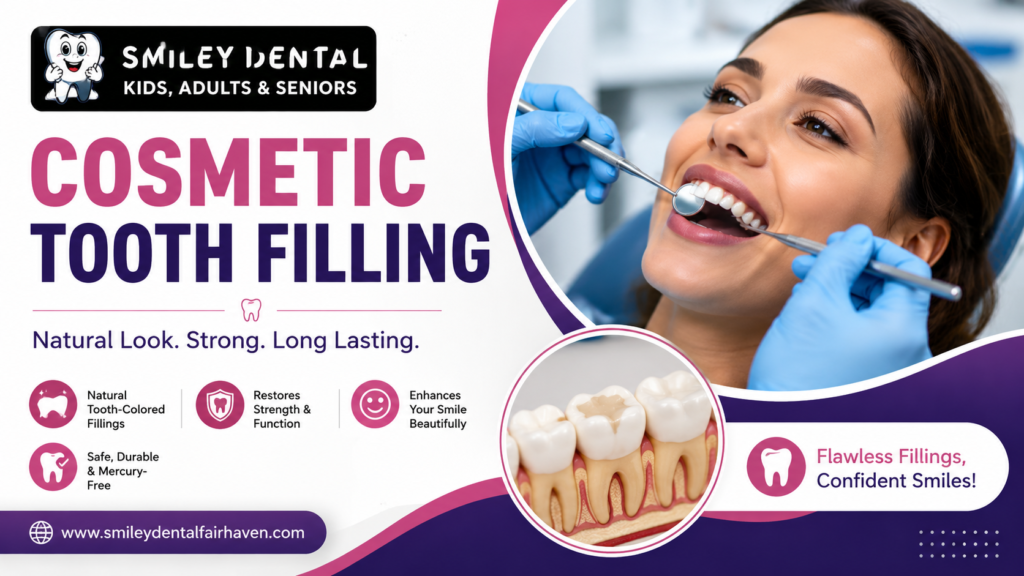
Cosmetic dental fillings are tooth-coloured restorations, typically made from composite resin or porcelain, used to repair cavities, chips or worn teeth while blending naturally into your smile. Unlike old-style metal fillings, they sit virtually unnoticed, hold up well to daily wear and are usually placed in a single, straightforward visit.
A chipped tooth or a niggling cavity has a way of showing up at the worst possible moment. The good news is that repairing it no longer means living with a grey or silver patch every time you smile. Cosmetic dental fillings have quietly become the standard choice for anyone who wants a repair that actually looks like a tooth.
In this guide, we’ll walk through what cosmetic dental fillings are, how they compare with traditional options, what the procedure involves, roughly what you can expect to pay, and how good habits, from routine visits to your dentist for teeth cleaning through to sealants for the kids, help your fillings last.
In This Article
- What Are Cosmetic Dental Fillings?
- Types of Cosmetic Dental Fillings
- Signs You Might Need a Filling
- The Cosmetic Filling Procedure: What to Expect
- Cosmetic Fillings vs Cavity Protection Sealants
- Why Regular Teeth Cleaning Matters for Filling Longevity
- Pediatric Dental Care and Cosmetic Fillings for Children
- Cost of Cosmetic Dental Fillings
- Caring for Your Cosmetic Fillings at Home
- How to Choose the Right Dental Clinic for Cosmetic Fillings
- Conclusion
What Are Cosmetic Dental Fillings?
Cosmetic dental fillings are restorations designed to repair decayed, cracked or worn teeth while matching the natural colour and translucency of your existing enamel. They’re most commonly made from composite resin, though porcelain and glass ionomer are also used depending on the location of the tooth and the extent of the damage.
Once bonded into place, a well-fitted tooth-coloured filling is difficult to spot even up close, which is why they’ve become the go-to option for front teeth and any visible area of the mouth.
How They Differ From Traditional Fillings
Traditional amalgam fillings are made from a metal alloy. They’re strong and long-lasting, but the dark grey colour stands out against natural teeth and the material expands and contracts slightly with temperature, which can eventually stress the tooth. Cosmetic fillings bond directly to the tooth structure, generally require less drilling, and blend in so well that most people can’t tell a tooth has been treated at all.
Types of Cosmetic Dental Fillings
Not all tooth-coloured fillings are the same. Your dentist will recommend a material based on where the filling sits and how much force that tooth takes on a daily basis.
| Material | Best For | Typical Lifespan |
|---|---|---|
| Composite resin | Front teeth, small to medium cavities, chips | 5 to 10 years |
| Porcelain / ceramic | Larger repairs, inlays and onlays | 10 to 15 years |
| Glass ionomer | Baby teeth, small fillings near the gumline | 3 to 5 years |
Signs You Might Need a Filling
Cavities don’t always announce themselves with pain, especially in the early stages. Keep an eye out for:
- Sensitivity to hot, cold or sweet foods
- A visible dark spot, pit or rough patch on a tooth
- Food regularly getting trapped in the same spot
- A sharp edge you can feel with your tongue
- Mild, lingering discomfort when chewing
If any of these sound familiar, it’s worth booking a check-up sooner rather than later: small cavities are far quicker and cheaper to treat than ones left to spread.
The Cosmetic Filling Procedure: What to Expect
One of the most reassuring things about cosmetic fillings is how simple the appointment usually is. Most patients are in and out within an hour, often with no need to come back for a second visit.
Step-by-Step Process
- Examination and, if needed, an X-ray to assess the extent of decay
- Local anaesthetic to numb the area, if required
- Removal of decayed material and gentle cleaning of the tooth
- Application of the composite or porcelain in thin layers
- Curing with a special light to harden each layer
- Shaping and polishing so the filling matches your bite and blends with surrounding teeth
Because the cosmetic filling procedure is minimally invasive, most people return to normal eating and drinking within a few hours, once any numbness has worn off.
Expert Tip
Avoid very hot or cold food for the first 24 hours after a composite filling. The material is fully set, but your tooth’s nerve can stay a little sensitive while it settles.
Cosmetic Fillings vs Cavity Protection Sealants
Fillings and sealants both protect teeth, but they solve different problems. A cavity protection sealant is a thin, protective coating painted onto the chewing surfaces of back teeth, usually molars, before decay has had a chance to start. A filling, on the other hand, repairs a tooth after decay or damage has already occurred.
| Cosmetic Filling | Cavity Protection Sealant | |
|---|---|---|
| Purpose | Repairs existing decay or damage | Prevents decay before it starts |
| When it’s used | After a cavity or crack is found | On healthy back teeth, often in children |
| Material | Composite resin or porcelain | Thin resin coating |
| Typical lifespan | 5 to 15 years | 3 to 5 years |
Many dentists recommend both as part of a long-term plan: sealants on healthy molars to head off decay, and fillings reserved for teeth that already need repair.
Why Regular Teeth Cleaning Matters for Filling Longevity
A filling isn’t a one-and-done fix: how well it lasts depends heavily on the health of the tooth around it. Plaque and tartar build-up at the edges of a filling can lead to new decay underneath or beside it, which is why routine visits to your dentist for teeth cleaning matter just as much after treatment as before.
- Removes plaque from areas a toothbrush can’t fully reach
- Lets your dentist check the seal around each filling for wear
- Catches new decay early, before it needs a bigger repair
- Keeps gums healthy, which protects the tooth root and filling margin
As a general rule, a professional clean and check-up every six months is enough for most people, though your dentist may suggest more frequent visits if you have several fillings or a history of decay.
Pediatric Dental Care and Cosmetic Fillings for Children
Baby teeth get cavities too, and treating them matters more than many parents realise: decayed baby teeth can affect the adult teeth growing beneath them and make eating uncomfortable for a child who can’t always explain what’s wrong.
Good pediatric dental care usually combines a few things: tooth-coloured fillings for any cavities that do appear, sealants on new molars as they come through, and a cleaning routine that’s gentle enough to keep a young patient relaxed. Composite and glass ionomer fillings are both popular for children because they’re quick to place and don’t involve the dark colouring of older filling materials.
Expert Tip
First dental visits are recommended by the child’s first birthday, or within six months of the first tooth appearing. Early check-ups make it far easier to catch small issues before they become fillings at all.
Cost of Cosmetic Dental Fillings
Pricing varies by location, the size of the cavity, and the material used, so treat the figures below as a general guide rather than a quote. Your dental clinic will confirm exact costs after an examination.
| Filling Type | Approximate Cost per Tooth (USD) |
|---|---|
| Composite resin | $150 to $400 |
| Porcelain / ceramic | $300 to $700+ |
| Glass ionomer | $100 to $300 |
Many dental insurance plans cover a portion of composite fillings, particularly for back teeth. If cost is a concern, ask your provider about tooth-coloured filling options and any available payment plans before treatment begins.
Caring for Your Cosmetic Fillings at Home
- Brush twice daily with a fluoride toothpaste
- Floss gently around the filling to clear trapped food
- Avoid chewing ice or very hard foods, which can chip composite material
- Limit sugary and acidic foods that encourage decay at the filling’s edge
- Wear a nightguard if you grind your teeth, since grinding wears fillings down faster
How to Choose the Right Dental Clinic for Cosmetic Fillings
Not every dental clinic offers the same range of materials or the same attention to colour-matching, and that detail matters when the filling is going somewhere visible. When comparing options, look for a clinic that:
- Uses composite and porcelain materials and can show before-and-after examples
- Offers a full range of services, from a dentist for teeth cleaning to restorative work, under one roof
- Has experience with pediatric dental care if you’re booking for a child
- Is transparent about pricing and insurance before you commit to treatment
- Can also handle related cosmetic work, such as a dental clinic for teeth whitening, if you’re planning a broader smile refresh
Ready for a filling that actually looks like a tooth? Book your cosmetic filling consultation today and find out which material is right for you.
Conclusion
Cosmetic dental fillings have made it possible to repair a tooth without anyone noticing it’s been done. Whether you’re dealing with a single cavity, considering sealants to protect a child’s new molars, or simply due for your next clean, the right care plan comes down to catching problems early and sticking with regular visits.
If it’s been a while since your last check-up, or you’ve noticed a spot that doesn’t feel quite right, don’t wait for it to get worse.
Book your appointment today and take the first step toward a healthier, more confident smile.
Frequently Asked Questions
Everything you need to know about teeth whitening and cosmetic fillings.