
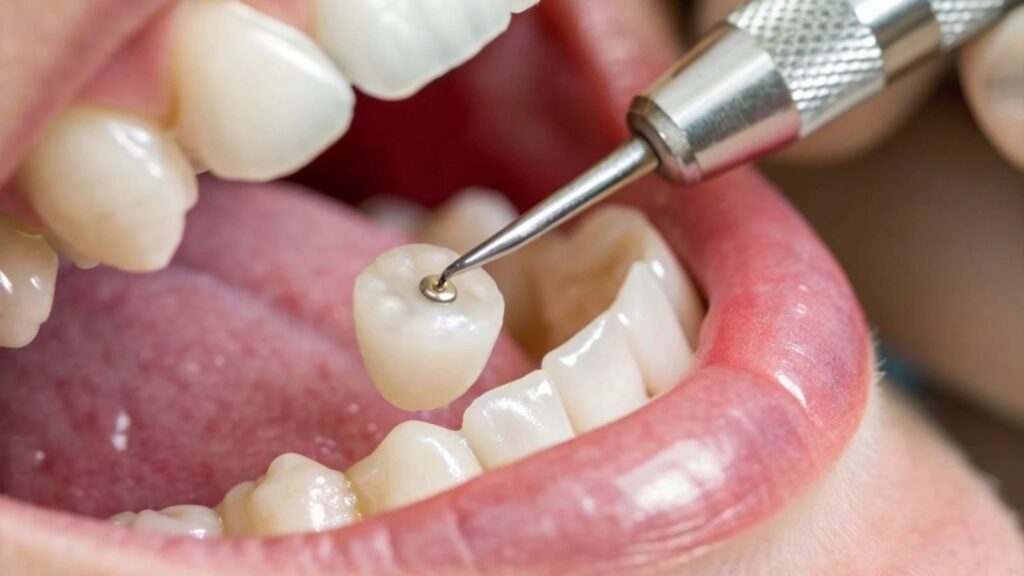
Choosing a dentist for a crown comes down to a few concrete checks: how carefully the tooth is evaluated, whether the recommended restoration is explained in plain terms, how the material options compare for your situation, what the total cost will be, and what maintenance the crown will need afterward.
Smiley Dental Fairhaven treats patients across the South Coast, including those travelling from Dartmouth and New Bedford, and our dental crowns and bridges in Fairhaven page sets out what treatment involves. This guide covers when a crown is recommended, the material choices, what the appointments look like, and what to ask first.
Quick Answer
A dental crown is a custom-made cap that covers a tooth to restore its shape, strength, and appearance. Dentists recommend one when a tooth is too damaged or weakened for a filling to hold. Common materials include porcelain, zirconia, and porcelain fused to metal, each suited to different situations. An examination determines whether a crown is appropriate, and a written estimate lets you compare treatment options and costs properly.
What Is a Dental Crown?
A dental crown is a custom-made covering that fits over a tooth, restoring its shape, strength, and appearance. It encases the visible part of the tooth rather than filling a hole in it, which is the practical difference between a crown and a filling.
A filling replaces lost tooth structure and relies on the remaining tooth around it for support. A crown takes over that job entirely, which is why it is used when too little sound structure remains for a filling to work.
Crowns are commonly recommended for teeth weakened by extensive decay, fractures, or large failing fillings, and for teeth needing protection after certain root canal treatments. A crown can also restore the visible portion of a dental implant where appropriate. Not every damaged tooth needs one, and that is worth hearing explained rather than assumed.
When Do You Need a Dental Crown?
The situations that most often lead to a crown recommendation:
- Extensive tooth decay that has left too little healthy structure for a filling
- A cracked, fractured, or broken tooth needing full coverage to hold it together
- A tooth weakened by a large old filling that is failing or has repeatedly been replaced
- A tooth needing protection after certain root canal treatments, particularly back teeth
- Severely worn teeth, often from grinding or acid erosion
- Teeth needing restoration for functional reasons, or for appearance in some cases
- Teeth used to support a dental bridge, which are crowned to carry it
What gets recommended depends on the extent of the damage, how much healthy structure remains, and your overall oral health. A dentist weighing a crown against a filling or onlay is judging whether the remaining tooth can carry the restoration, and you are entitled to hear that reasoning.
What Types of Dental Crowns Are Available?
Porcelain or ceramic. Often selected for appearance, since they most closely resemble natural tooth enamel. Commonly used on front teeth and other visible areas.
Zirconia. Available in tooth-colored options and commonly chosen where strength is a priority, such as back teeth or patients who grind. Newer translucent types look better than older ones.
Porcelain fused to metal. A metal base gives strength while a tooth-colored outer layer handles appearance. A dark line can become visible at the gumline if the gums recede over time.
Metal alloys. Used in selected cases where durability and function take priority over appearance, typically on molars. They also require less tooth structure to be removed.
The right material depends on where the tooth sits, the bite forces it takes, how much it shows, how much structure remains, and your dentist’s assessment. No material is universally better, and a practice using the same one for every case is not matching treatment to the tooth. Where appearance matters, cosmetic dentistry options in Fairhaven may be relevant too, though a crown placed to protect a damaged tooth is restorative rather than cosmetic.
What Happens During a Dental Crown Procedure?
Treatment follows the same stages. Your dentist examines the tooth, takes any necessary imaging, then confirms whether a crown is right and whether anything needs doing first.
The tooth is numbed and reshaped so the crown fits over it. An impression or digital scan then records the prepared tooth and your bite, so the crown fits precisely and meets the opposing teeth correctly.
If the permanent crown is not ready the same day, a temporary crown protects the tooth in the meantime. At the fitting appointment the dentist checks the fit, the contacts with neighboring teeth, the color, and the bite, makes adjustments, then cements it.
The number of appointments varies with the case, the material, and the technology the practice uses. Some offices mill crowns on site and finish in one visit, while others use an outside laboratory and need two. Ask which applies so you can plan around it.
How Do You Choose the Right Dentist for Crowns in Fairhaven?
Looking for a dentist for crowns in Fairhaven, MA means comparing a handful of things you can actually verify:
✓ Confirm the dentist’s license and qualifications, which are a matter of public record in Massachusetts
✓ Ask about their experience treating your specific dental problem, not crowns in general
✓ Discuss the material options and the limitations of each for your tooth
✓ Understand the proposed treatment plan and what the alternatives would be
✓ Request an estimate of total costs and any expected insurance benefit
✓ Ask about follow-up care and what maintaining the crown involves
✓ Notice how clearly the team explains things, since that predicts the rest of the relationship
Where appearance matters, the same evaluation applies to aesthetic judgment, and our guidance on choosing a cosmetic dentist in Fairhaven covers what to look at. A dentist who explains why one option suits your tooth better than another is giving you something useful. A claim to be the best is not.
Are Dental Crowns Painful?
Local anesthetic is commonly used during tooth preparation, so the procedure itself is usually comfortable. Most patients describe pressure and vibration rather than pain.
Temporary sensitivity or tenderness afterward is common, particularly to cold, and generally settles as the tooth adjusts. We will not promise a completely painless procedure, because that is not something any dentist can guarantee.
Two things should be looked at rather than waited out: discomfort that persists or worsens, and a crown that feels too high when you bite. A high crown takes more force than its neighbors and is a quick adjustment, not something to live with. Tell the team beforehand about anxiety, sensitivity, or a previous bad experience.
How Much Does a Dental Crown Cost in Massachusetts?
Several factors move the figure:
- The crown material, since ceramic, zirconia, and metal are not priced alike
- The tooth’s location and condition
- How complex the preparation is, including whether a build-up is needed first
- Whether root canal treatment or another procedure is also required
- Laboratory and fabrication requirements
- Your insurance benefits and resulting out-of-pocket amount
We are not publishing a statewide average or quoting fees. A number taken from an article is not an estimate, and the only figure worth planning around is the one calculated for your mouth after an examination.
Ask for a written plan and estimate that separates the crown fee from any additional treatment, so you can see what each part covers. If you are paying without dental coverage, our overview of dental care options for patients without insurance covers what to ask.
Does Dental Insurance Cover Dental Crowns?
Many dental plans provide partial benefits for crowns when treatment meets the plan’s requirements, typically covering a percentage rather than the full fee. Coverage differs considerably between policies, so what a friend’s plan paid tells you little about yours.
Several features affect what you receive. Deductibles must be met first. Annual maximums cap what the plan pays in a benefit year and can run out partway through treatment. Waiting periods delay coverage on newer policies. Replacement limits restrict how often a crown on the same tooth is covered. Exclusions remove some treatments entirely.
One distinction matters: a crown placed to restore a damaged tooth is usually treated differently from treatment undertaken purely for appearance, which many plans exclude. Confirm benefits before treatment and ask whether your insurer offers a pre-treatment estimate, which gives you the plan’s own figure in writing.
How Do You Care for a Dental Crown?
✓ Brush twice daily with fluoride toothpaste, including along the gumline at the crown’s edge
✓ Clean between your teeth daily and around the crown, where decay most often starts
✓ Keep up with regular dental examinations so the margin can be checked
✓ Avoid using your teeth to open packages or bite hard objects such as ice and pens
✓ Discuss a night guard if you grind or clench your teeth
✓ Contact your dentist if the crown becomes loose, cracks, or causes persistent pain
Worth understanding: the crown itself cannot decay, but the natural tooth underneath it can. Decay at the margin where crown meets tooth is the most common reason one eventually needs replacing, and that is largely a maintenance matter. Crowns need looking after rather than forgetting about.
When Is a Dental Crown an Emergency?
Contact a dentist promptly if a crown falls out or becomes loose, a tooth breaks beneath a crown, significant pain develops, swelling or signs of infection appear, or a damaged restoration is making it hard to chew.
A displaced crown is not usually a hospital matter, but it needs prompt attention, because the prepared tooth underneath is exposed and can shift or decay. Keep the crown, avoid chewing on that side, and call the office. Our guidance on what to do if your dental crown falls out covers the first steps.
| Seek emergency medical care immediately if facial or neck swelling is accompanied by difficulty breathing or swallowing. That combination can indicate a spreading infection and is a medical emergency rather than a dental appointment. |
Dental Crown Care Serving Fairhaven, Dartmouth and New Bedford
Patients across the South Coast have a reasonable choice of practices, so pick on substance. Look for an office that examines the tooth properly, explains what it finds, sets out the realistic options including the less extensive ones, and puts costs and insurance in writing before treatment starts.
Smiley Dental Fairhaven is based in Fairhaven and treats patients travelling from Dartmouth, New Bedford, and the surrounding area. Searching for the best dentist for crowns Fairhaven offers is really a search for the one who explains your particular tooth most clearly and gives you a plan you understand.
If you have a cracked, decayed, or heavily filled tooth, the next step is an evaluation rather than a decision. Contact the office to arrange one and find out whether a crown is the right treatment for you.
Arrange an Evaluation
Dental crowns restore teeth weakened by decay, fractures, wear, or previous treatment, protecting what remains of a tooth that could not carry a filling. Whether one is right for your tooth depends on an individual examination rather than the symptom alone, and sometimes the answer is a less extensive restoration.
If you are in Fairhaven, Dartmouth, or New Bedford with a damaged or painful tooth, contact Smiley Dental Fairhaven to schedule an evaluation. We can discuss your symptoms, the material options, the alternatives worth considering, the expected costs, and how your insurance is likely to apply, before you commit.