
Quick Answer
General dentists commonly evaluate, prepare, and place dental crowns, so a family practice such as Smiley Dental Fairhaven is usually the right starting point. For complex cases, your dentist may recommend consulting a specialist. Whether a crown is appropriate depends on how much healthy tooth structure remains, and that requires an examination. Look for a dentist who explains your options clearly, including alternatives to a crown.
If a dentist has mentioned a crown, or you have a tooth that feels weak or looks damaged, it helps to understand what crowns actually do before deciding anything.
This guide covers who places crowns, when they are recommended, what affects cost and lifespan, how materials compare, what alternatives exist, and how to choose a dentist. It is written for families in Fairhaven, MA and the surrounding South Coast who want to understand their options without pressure.
What Type of Dentist Is Best for Crowns?
General dentists place the large majority of dental crowns. Evaluating a damaged tooth, preparing it, taking impressions or a digital scan, and fitting the final crown are all routine parts of general practice, so you do not need a specialist for most cases.
Some situations do call for specialist involvement. A tooth needing root canal treatment first may be referred to an endodontist. A tooth with significant gum or bone concerns may involve a periodontist. Complex full-mouth cases sometimes involve a prosthodontist. Your dentist should tell you plainly if your case falls into one of these categories.
When choosing a dentist for crowns, what matters most is not the title. Look for someone who examines thoroughly, explains why a crown is being recommended for your specific tooth, discusses alternatives openly, and gives you time to decide. A dentist willing to say a crown is not necessary is showing you something valuable.
When Might You Need a Dental Crown?
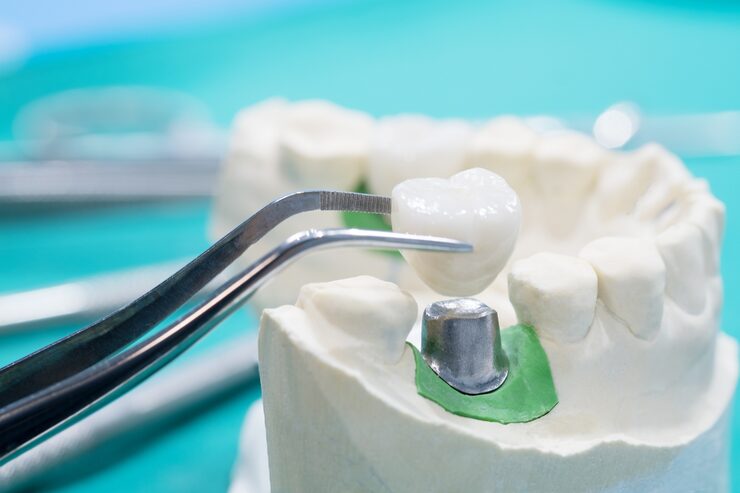
A crown covers and protects the entire visible portion of a tooth. It is generally considered when a tooth needs more support than a filling can provide.
- A significantly damaged or weakened tooth that may fracture under normal chewing.
- A large existing filling with insufficient healthy structure left to support another one.
- Certain cracked or broken teeth, depending on where and how deep the crack runs.
- A tooth after root canal treatment when a crown is recommended to protect it.
- Severe wear that has compromised the tooth’s shape and function.
Not every cracked, filled, or discolored tooth needs a crown. A small chip may only need bonding. A discolored front tooth may be a cosmetic question rather than a structural one. The deciding factor is how much healthy tooth remains and whether it can support a smaller restoration, which only an examination and X-rays can establish.
How Much Does a Dental Crown Cost?
There is no single price, because crowns are tailored to the tooth. Several factors shape what you pay:
- Crown material, since porcelain, zirconia, and metal options differ in cost.
- Tooth location, as front teeth often have different aesthetic demands than molars.
- Complexity of treatment, including how much preparation the tooth needs.
- Additional treatment such as a core buildup or root canal beforehand.
- Your dental insurance and how your plan classifies the procedure.
Ask for an itemized written estimate after an examination, and ask specifically whether a buildup or other preparatory work is included in the figure. Many plans cover crowns as major restorative work at a percentage, subject to an annual maximum, so a pre-treatment estimate submitted to your insurer is worth requesting before you commit.
How Long Do Dental Crowns Last?
Crowns can last many years with good care, though no dentist can promise a specific lifespan. Longevity depends on several things:
- Oral hygiene, particularly cleaning along the crown margin at the gumline.
- Bite forces and where the crown sits in your mouth.
- Grinding or clenching, which places considerable stress on any restoration.
- Crown material and how it handles the demands of that position.
- The condition of the underlying tooth supporting the crown.
- Regular examinations, which catch problems at the margins early.
The most common reason a crown eventually needs replacing is not the crown failing but decay developing in the natural tooth beneath it, which is why hygiene and routine checkups matter as much after the crown as before.
When Is It Too Late to Put a Crown on a Tooth?
It depends on how much healthy tooth structure remains and whether the tooth can be predictably restored. A crown needs something solid to sit on.
Situations that may make a crown unsuitable include severe decay leaving too little structure, a fracture extending below the gumline, extensive bone loss around the tooth, or an untreated infection that must be resolved first. In some cases a core buildup can rebuild enough foundation to support a crown, and in others root canal treatment comes first.
When a tooth truly cannot be restored, extraction and replacement may be discussed instead. An examination with appropriate imaging is the only way to determine which category your tooth falls into, so it is worth having a questionable tooth assessed rather than assuming either way.
What Type of Dental Crown Is the Healthiest?
No single material is the healthiest for every patient. Each has strengths suited to different situations, and the right choice depends on your tooth.
| Material | Strengths | Considerations | Often Used For |
| Porcelain or ceramic | Most natural appearance | May be less suited to heavy grinding | Front teeth, visible areas |
| Zirconia | Very strong, chip-resistant | Can look less translucent than porcelain | Back teeth, patients who grind |
| Porcelain-fused-to-metal | Balance of strength and appearance | A metal line may show at the gumline over time | A range of positions |
| Metal or gold alloy | Highly durable, gentle on opposing teeth | Clearly visible, no cosmetic blending | Back teeth where appearance matters less |
Your dentist weighs tooth location, your bite, appearance priorities, durability needs, and any grinding habit. For front teeth where appearance leads, material choice overlaps with cosmetic dentistry considerations, and our overview of common cosmetic dental procedures explains how these treatments relate.
Is There a Better Alternative to a Crown?
Sometimes, depending entirely on the condition of the tooth. Alternatives are not interchangeable with crowns in every situation, and a tooth that needs full coverage will not be well served by a smaller restoration.
- Dental bonding for small chips and minor cosmetic concerns.
- Tooth-colored fillings when enough healthy structure remains to support one.
- Inlays or onlays, which cover more than a filling but less than a full crown.
- Veneers for front-tooth appearance concerns where the tooth is structurally sound.
The distinction that matters is structural versus cosmetic. A weakened tooth at risk of fracturing needs protection, while a sound tooth you dislike the look of is a different question. Our comparison of cosmetic dental fillings and our guide to cosmetic dentistry treatments cover the less invasive options. Ask your dentist directly what would happen if you chose a smaller restoration, and what the trade-off would be.
Can a Tooth Still Decay Under a Crown?
Yes, and this surprises many patients. A crown covers and protects the visible portion of the tooth, but it does not make the tooth immune to decay.
Decay typically develops at the margin, the line where the crown meets your natural tooth near the gumline. Plaque accumulates there like anywhere else, and if the margin is not cleaned thoroughly or the cement seal breaks down over time, bacteria can reach the tooth underneath. Because it is hidden beneath the crown, this decay often causes no symptoms until it is well established.
| Protecting the Tooth Under Your Crown Brush twice daily with fluoride toothpaste, paying particular attention to the gumline where the crown meets your tooth. Clean between your teeth every day, since the margins between a crown and its neighbors are common decay sites. Limit how often you have sugary foods and drinks, since frequency matters more than quantity. Keep your recommended dental examinations, because X-rays can reveal decay beneath a crown that you would never notice yourself. A crown protects the tooth, but only your habits protect what is underneath it. |
Choosing a Dentist for Crowns in Fairhaven
When comparing practices, a few things reliably predict a good experience:
✓ The dentist examines thoroughly and takes X-rays before recommending treatment
✓ They explain why a crown is recommended for your specific tooth
✓ Alternatives are discussed openly, including doing less
✓ Material options are explained with their trade-offs
✓ Costs are itemized in writing before treatment
✓ You are given time to decide without pressure
✓ The practice is convenient enough that you will return for follow-up
Our office at 17 Berdon Way serves Fairhaven, New Bedford, Acushnet, Dartmouth, and Mattapoisett, providing restorative and cosmetic dental care for families across the South Coast. Whether a crown is the right answer for your tooth is something an examination determines, not a website.
Frequently Asked Questions
What type of dentist is best for crowns?
General dentists place most dental crowns as a routine part of practice, so a family dentist is usually the right starting point. Complex cases may involve an endodontist, periodontist, or prosthodontist. What matters more than the title is whether the dentist examines thoroughly, explains the recommendation, and discusses alternatives.
How much does one dental crown cost?
Cost varies by material, tooth location, treatment complexity, whether preparatory work such as a buildup is needed, and your insurance coverage. Because these differ so much between patients, ask for an itemized written estimate after an examination rather than relying on a general figure.
When is it too late to put a crown on a tooth?
When too little healthy structure remains for a crown to sit on predictably. Severe decay, a fracture extending below the gumline, significant bone loss, or untreated infection can all affect suitability. A buildup or root canal sometimes makes a crown possible. An examination with imaging determines this.
What is the average cost for a dental crown?
Published averages exist, but they blend very different situations and rarely predict an individual’s cost accurately. A porcelain crown on a front tooth requiring a buildup is a different proposition from a metal crown on a molar. Treat averages as background context and ask for a personalized estimate.
How long do crowns on teeth last?
Many crowns last a decade or longer with good care, though no specific lifespan can be guaranteed. Oral hygiene, bite forces, grinding, the material used, and the condition of the underlying tooth all affect it. The most common reason for replacement is decay developing in the tooth beneath.
Why do dentists recommend crowns?
Recommendations are based on the condition of the tooth rather than a preference for treatment. A crown is generally suggested when too little healthy structure remains to support a filling, when a tooth is cracked or weakened enough to risk fracturing, or after root canal treatment. Ask your dentist to explain the reasoning for your specific tooth.
How painful is replacing a crown?
Replacing a crown is generally comparable to having the original placed. Local anesthesia is used when appropriate, so most patients feel pressure rather than pain. Some temporary sensitivity afterward is normal. If decay is found underneath, additional treatment may be needed, which your dentist will explain first.
What type of dental crown is the healthiest?
No single material is healthiest for everyone. Porcelain and ceramic look most natural, zirconia is very strong and chip-resistant, porcelain-fused-to-metal balances both, and metal alloys are highly durable. The appropriate choice depends on tooth location, your bite, appearance priorities, and whether you grind your teeth.
Is there a better alternative to a crown?
Sometimes, depending on the tooth. Bonding, tooth-colored fillings, inlays, onlays, and veneers may be appropriate in certain situations. They are not interchangeable with crowns, though, since a tooth needing full coverage will not be adequately protected by a smaller restoration. Ask what the trade-off would be in your case.
Can a tooth still decay under a crown?
Yes. A crown protects the visible portion but does not make the tooth immune. Decay usually develops at the margin where the crown meets your natural tooth near the gumline. Because it is hidden, it often causes no symptoms early, which is why brushing that margin, cleaning between teeth, and regular X-rays matter.
The Bottom Line
General dentists place most crowns, and the right dentist for your case is one who examines carefully, explains why a crown is recommended for your particular tooth, and discusses the alternatives openly. A crown is appropriate when too little healthy structure remains for a smaller restoration, but not every cracked, filled, or discolored tooth needs one. Material choice depends on tooth location, your bite, and appearance priorities rather than any single material being best.