| Quick Answer Peroxide-based whitening is the only clinically proven way to change your natural tooth color. In-office treatment takes about 60 to 90 minutes with results visible the same day, while dentist-provided take-home trays work over one to three weeks. Surface stains from coffee, tea, and tobacco respond well. Deep internal discoloration often does not, and veneers may be the better option in those cases. |
Search for a whiter smile and you will find charcoal powders, LED kits, oil pulling, baking soda hacks, and a hundred products all promising dramatic results. Very few of them do what they claim.
This guide separates what is clinically supported from what is marketing. It covers why teeth discolor, how the real options compare, when whitening will not work and veneers make more sense, and what to realistically expect. If you are considering seeing a teeth whitening dentist in Fairhaven, start by understanding what is actually causing your discoloration.
Why Teeth Discolor in the First Place
This is the most important section in the guide, because the cause of your staining determines whether whitening will work at all.
| Stain Type | Common Causes | Responds to Whitening? |
| Extrinsic (surface) | Coffee, tea, red wine, cola, tobacco, dark sauces | Yes, usually very well |
| Age-related | Enamel thinning, yellower dentin showing through | Often, to a degree |
| Intrinsic (internal) | Tetracycline, trauma, fluorosis, root canal changes | Poorly and unpredictably |
| Restorations | Crowns, veneers, tooth-colored fillings | No, materials do not lighten |
Extrinsic stains sit on the outside of the enamel and are what most people are dealing with. Whitening gel breaks these down effectively. Intrinsic discoloration comes from within the tooth structure itself, often from medication taken during childhood, an old injury, or changes after a root canal. Peroxide cannot reach those in the same way, which is why results are unpredictable and sometimes disappointing.
Teeth Whitening Options Compared
Here is how the realistic options stack up.
At-Home Strips and Kits
Over-the-counter strips and kits use lower peroxide concentrations, so results are milder and take longer. They can help with light surface staining at low cost. The main drawbacks are uneven coverage, since strips do not fit the contours of your teeth, and no professional assessment of whether whitening suits your mouth in the first place.
Custom Take-Home Trays From a Dentist
A meaningful step up. Your dentist takes impressions and makes trays that fit your teeth precisely, then provides professional-grade gel. The custom fit keeps gel on the teeth and off the gums, which improves both results and comfort. Most patients see change within a week and full results in one to three weeks.
In-Office Professional Whitening
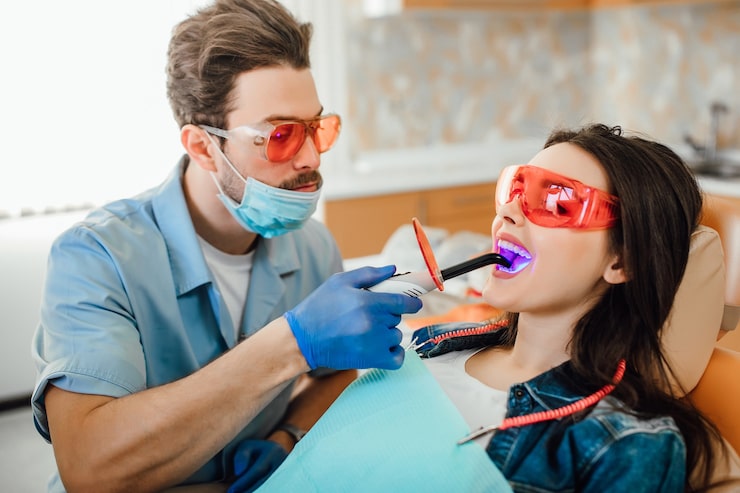
The fastest option. A high-concentration gel is applied while your gums are protected, usually in two or three timed cycles over 60 to 90 minutes. You leave with a visible change the same day. Some systems use a light, though as covered below, the gel does the actual work.
Whitening Toothpaste and Charcoal Products
Worth being clear about. Whitening toothpastes work primarily by scrubbing away surface stains with mild abrasives. They can help maintain a bright smile but do not change your natural tooth color the way peroxide does. Charcoal products are the bigger concern: research reviews have found insufficient evidence supporting their whitening claims, and their abrasiveness raises legitimate concerns about enamel wear with regular use.
| Method | Time to Results | Relative Cost | Longevity | Sensitivity Risk |
| In-office whitening | Same day | Highest | Months to a few years | Higher, but managed |
| Custom take-home trays | 1 to 3 weeks | Mid-range | Similar with good care | Moderate, adjustable |
| OTC strips and kits | 2 to 4 weeks | Lowest | Shortest, fades sooner | Variable, self-managed |
| Whitening toothpaste | Gradual, surface only | Very low | Maintenance only | Low, but abrasion risk |
What Actually Works: The Evidence
Strip away the marketing and the picture is fairly simple. Peroxide, in the form of hydrogen peroxide or carbamide peroxide, is the only active ingredient clinically proven to change the color of natural teeth. Carbamide peroxide breaks down into hydrogen peroxide more slowly, which is why it is common in take-home trays, while in-office treatments typically use hydrogen peroxide directly at higher concentrations.
Does the LED Light Actually Whiten Teeth?
Not on its own. The light does not whiten anything, the peroxide gel does. Research on light activation has found it adds little beyond what the gel achieves, and it may increase sensitivity. This matters most for consumer LED kits sold on the strength of the light itself, where the low-concentration gel is doing whatever modest work occurs. Do not choose a product based on the light.
Does Charcoal Toothpaste Really Whiten Teeth?
There is insufficient evidence that it does. Charcoal is abrasive, so it may scrub away some surface staining and create a short-term impression of whitening, but it does not lighten your natural tooth color. Reviews of the available research have raised concerns about enamel abrasion with regular use, and charcoal products generally lack the ADA Seal of Acceptance.
What About Baking Soda, Lemon, and Oil Pulling?
Baking soda is mildly abrasive and can remove some surface stain, which is why it appears in some approved toothpastes at controlled levels. It does not change intrinsic color. Lemon juice and other acidic remedies are actively harmful, because acid erodes enamel, and thinner enamel reveals more of the yellower dentin underneath, making teeth look darker over time. Oil pulling has no credible evidence for whitening.
How Many Shades Whiter Can You Realistically Get?
Professional whitening often lightens teeth by several shades, but no honest dentist will guarantee a specific number. Your result depends on your starting shade, the type of staining, and your enamel. Whitening also cannot lighten teeth beyond their natural underlying color, which is the ceiling nobody can move.
| Why Your Shade Settles After Treatment Teeth look their brightest immediately after whitening, and part of that is temporary. The process slightly dehydrates the enamel, making teeth appear whiter and more opaque than their true settled shade. Over the following days the enamel rehydrates and the color settles back a little. That is normal, not a failed treatment. Your genuine final result is what you see about one to two weeks later, which is exactly why whitening before a wedding or event should be scheduled a week or two ahead rather than the day before. |
When Whitening Will Not Work: Veneers as an Alternative
Some situations simply do not respond to whitening, and knowing this in advance saves disappointment and money. Signs that whitening may not be the answer:
✓ Deep internal staining from tetracycline, trauma, or fluorosis
✓ Grayish rather than yellowish discoloration
✓ A single dark tooth following a root canal
✓ Visible crowns, veneers, or fillings on front teeth
✓ Chips, worn edges, or uneven shape alongside the color concern
✓ Previous whitening that produced little or no change
Porcelain Veneers
Thin porcelain shells bonded to the front of teeth, covering discoloration entirely rather than lightening it. They address color and shape at once and resist staining well, typically lasting 10 to 15 years or more. The significant consideration is that preparation removes a thin layer of enamel that does not grow back, making veneers a lifelong commitment rather than a reversible choice.
Composite Veneers
Applied directly using tooth-colored composite in a single visit, at lower cost than porcelain. They typically last around five to seven years and are more prone to staining over time. For some patients they are a sensible middle step, and they are often more conservative than porcelain.
Whitening and Veneers Together
This combination matters and is frequently overlooked. Because veneers do not lighten later, the usual sequence is to whiten your natural teeth first, allow the shade to settle for a week or two, then match the veneers to your newly brightened teeth. Doing it in the reverse order leaves you with veneers matched to a darker shade you no longer want. Any dental clinic for teeth whitening planning combined treatment should raise this with you upfront.
On long-term value, veneers cost considerably more upfront but last a decade or more, while whitening costs less per treatment and needs periodic repeating. Over ten or fifteen years the gap narrows, though they are solving different problems and should not be chosen on cost alone.
How Much Does Teeth Whitening Cost at a Dentist?
Professional whitening costs vary by method and by practice. In-office treatment sits at the higher end because it delivers fast, supervised results in a single visit, dentist-provided take-home trays are more moderate, and over-the-counter products cost the least while delivering the mildest results.
Your actual cost depends on the treatment chosen, how severe your staining is, how many sessions you need, and whether other dental work should be addressed first. Whitening is considered cosmetic, so dental insurance rarely covers it. For a fuller local breakdown, see our guides on teeth whitening cost in Fairhaven, professional whitening cost, and our dentist guide to whitening costs. The only accurate figure is one quoted after an examination.
Is In-Office Whitening Safe?
Professional whitening is considered safe when performed or supervised by a dentist, and it does not damage enamel when used correctly. Peroxide works by breaking down stain molecules rather than by abrading the tooth surface.
Why Does Whitening Cause Sensitivity?
Peroxide temporarily opens microscopic channels in the enamel, which can make teeth briefly more responsive to hot and cold. Sensitivity typically peaks within the first day or two and resolves within a few days. Dentists manage it with desensitizing agents, adjusted gel concentrations, or shorter application times, which is one clear advantage of supervised treatment.
What Prevents Gum Irritation?
In-office treatment includes a protective barrier placed along the gumline before the gel is applied, and custom trays are trimmed to fit precisely. Ill-fitting drugstore trays and strips are the more common source of gum irritation, because gel leaks onto soft tissue.
Who Should Avoid Whitening?
Whitening is generally deferred during pregnancy and while nursing as a precaution, since it is elective. It is not recommended for young children with developing teeth. Anyone with untreated decay, active gum disease, cracked teeth, or significant sensitivity should have those addressed first. Patients with crowns or veneers on visible front teeth should discuss expectations carefully, since those will not lighten.
What to Expect at Smiley Dental Fairhaven
Every whitening plan starts with an evaluation rather than a product recommendation. Your dentist examines your teeth and gums, identifies what type of staining you have, records your current shade so progress can be measured objectively, and discusses what is realistically achievable. Our approach to professional teeth whitening is built around matching the method to the cause of your discoloration.
From there you receive a recommendation, whether that is in-office treatment, custom take-home trays, a combination, or in some cases veneers if whitening is unlikely to deliver what you want. You will also get aftercare guidance, including the 48-hour window when teeth are most vulnerable to re-staining and worth avoiding coffee, tea, red wine, and tobacco.
Our office is at 17 Berdon Way, serving Fairhaven, New Bedford, Acushnet, Dartmouth, and the wider South Coast. To learn more about how professional treatment addresses long-standing discoloration, see our guide on safely lifting years of deep stains, or compare approaches in our Fairhaven whitening options and costs guide.
Frequently Asked Questions
How long does professional teeth whitening last?
Typically several months to a few years, depending heavily on your habits. Coffee, tea, red wine, and tobacco shorten results considerably, while good oral hygiene, routine cleanings, and occasional touch-ups extend them. No specific duration can be guaranteed, since it varies from person to person.
Is in-office whitening better than strips?
For speed and results, yes. In-office treatment uses much stronger gel under professional supervision with gum protection, producing visible change in one visit. Strips are cheaper and convenient for mild surface staining, but results are milder, less even, and fade sooner. The better choice depends on your goals and budget.
Can veneers be whitened later?
No. Porcelain and composite do not respond to whitening gel at all. This is why the correct sequence is to whiten your natural teeth first, let the shade settle, then match veneers to that result. If existing veneers no longer match, replacement is the only way to change their color.
How much does teeth whitening cost at a dentist?
It depends on the method and your case. In-office treatment costs the most and delivers same-day results, dentist take-home trays are more moderate, and store products cost least with the mildest effect. Insurance rarely covers whitening since it is cosmetic. Ask for a personalized quote after an exam.
Does whitening damage enamel?
Professional whitening used correctly does not damage enamel, since peroxide breaks down stains rather than abrading the tooth. Temporary sensitivity is common but not the same as damage. The genuine risks come from overusing products without guidance, or from abrasive DIY remedies and acidic substances like lemon juice.
Can I whiten teeth with crowns or fillings?
Whitening will lighten your natural teeth but not crowns, veneers, or tooth-colored fillings, which keep their original color. If you have visible restorations on front teeth, they may look darker afterward and might need replacing to match. Discuss this with your dentist before treatment so there are no surprises.
Can yellow teeth actually be whitened?
Usually yes. Yellowing from coffee, tea, wine, tobacco, and natural aging responds well to professional whitening. Grayish tones and deep internal discoloration respond far less predictably and may need veneers instead. Whitening also cannot lighten teeth beyond their natural underlying color.
Is getting your teeth whitened at the dentist worth it?
For most people wanting a noticeable change, yes. Professional treatment gives faster, more even, longer-lasting results with an evaluation of whether your teeth are suitable and gum protection during treatment. Whether it is worth the cost depends on your goals, budget, and the type of staining you have.
How soon before an event should I whiten?
Schedule about one to two weeks ahead. Teeth look brightest immediately after treatment partly because of temporary enamel dehydration, and the shade settles over the following days. That window also lets any sensitivity resolve. Whitening the day before an event is not ideal for either reason.
The Bottom Line
Peroxide-based whitening is the only proven way to lighten natural teeth, and it works best on surface stains from coffee, tea, wine, and tobacco. Charcoal, lemon, and most DIY remedies either do nothing for your actual tooth color or risk wearing enamel. When discoloration is deep and internal, or when chips and shape are part of the concern, veneers address what whitening cannot. Crowns and fillings never lighten, whichever route you take.
The right approach depends entirely on what is causing your discoloration, which is something an examination determines in minutes. If you would like an honest assessment of what is achievable for your smile, contact Smiley Dental Fairhaven at 17 Berdon Way. Call 508-967-1000 to arrange a whitening consultation.
| Want to know what will actually work for your smile? Smiley Dental Fairhaven, 17 Berdon Way. Call 508-967-1000 to arrange a consultation. We will identify what is causing your discoloration and explain which options are realistic before you commit to anything. |